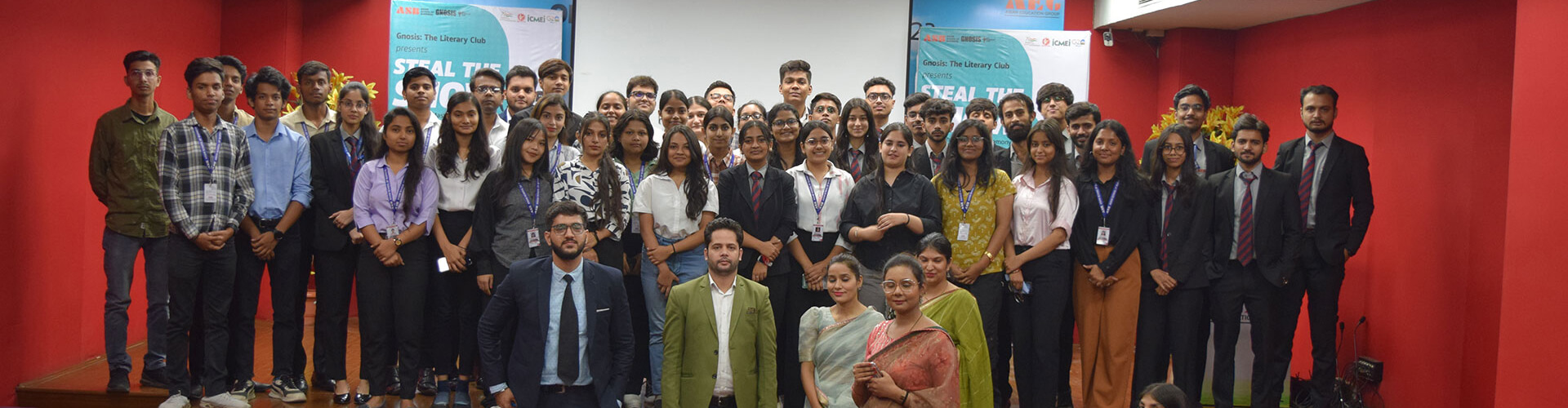
Asian School of Business (ASB) proudly offers the Bachelor of Computer Applications (BCA) – International, a three-year full-time degree program affiliated with CCS University. What sets this program apart is its exclusive International Certification in Personal & Professional Development, complemented by a 15-day fully paid residential workshop and certification from Oxford Business College, Oxford & London, UK.
Why Choose BCA International at ASB?
This program is designed to equip students with a comprehensive understanding of Information Technology (IT) while integrating essential management principles. Our curriculum fosters an innovative learning environment, transforming students into highly skilled IT specialists ready to thrive in the global industry.
Global Learning with an Industry-Focused Approach
✔ International Certification from Oxford Business College, UK, enhancing professional credibility.
✔ 15-Day Fully Paid Residential Program at Oxford & London, providing global exposure.
✔ Comprehensive IT & Management Curriculum designed for practical, real-world application.
✔ Live Industry Projects & Hands-on Training, bridging the gap between theory and practice.
✔ Exclusive Focus on the Entertainment & Business Sectors, making graduates industry-ready.
Transforming IT Enthusiasts into Future-Ready Professionals
The BCA International program at ASB aims to cultivate exceptional IT professionals who can seamlessly integrate theoretical knowledge with hands-on experience. Students will develop stand-alone live projects across various industries, including the booming global entertainment industry. The program ensures corporate-ready graduates, equipped to handle complex IT applications in business and event management scenarios.
Join ASB and Shape Your Future in the Digital World!
Embark on a journey of excellence with BCA International at ASB, where technology meets global opportunities!
3 Year BCA Degree Program
with major specializations in (anyone)
| Artificial Intelligence & Machine Learning (Using Python) |
| Full Stack Development |
| Data Science |
with specialised certification in (anyone)
Cloud Computing & DevOps
Module: 1 Cloud Computing Fundamentals
Module: 2 Cloud Infrastructure & Services
Module: 3 DevOps Tools & Automation
Module: 4 Cloud Security & Reliability
Cyber Security
Module: 1 Foundations of Cyber Security
Module: 2 Network & System Security
Module: 3 Ethical Hacking & Vulnerability Testing
Module: 4 SOC Operations & Incident Response
Project Management
Module: 1 Fundamentals of Project Management
Module: 2 Agile, Scrum & PM Tools
Module: 3 Business Analysis & Documentation
Module: 4 Leadership, Communication & Delivery
With Additional Diplomas / Certification Courses
International Certification in Personal & Professional Development from O.B.C., Oxford/London, UK
15-Day Fully Paid Residential Learning Workshop to Oxford & London (U.K.) is subject to clearance of individual’s Visa by competent authority. Visa processing fee is paid only once by ASB. Any other expense of personal nature excluding one-time visa fee, travel expense, lodging and food allowance will be borne by the student. Maximum of two chances shall be provided for Visa application.
First chance will be given in the second year of the course and in case of rejection in first chance, second chance will be provided in the third year of course.
Web Analytics Executive Certification Program with
Course Outcomes:
Web Analytics
After completing the course the students will be able to:
- Explain the role and importance of web analytics in understanding online user activity.
- Use basic web analytics tools to collect website data.
- Analyze website traffic patterns and user interaction using key metrics.
- Identify website issues and recommend improvement areas based on analytics insights.
- Prepare basic web analytics reports and dashboards.
- describe Google Analytics, types of analytics, segmentation techniques, content and mobile analytics, and challenges related to digital data.

Diploma in Media Applications from Asian Academy of Film and Television |
Program Objectives:
The Diploma in Media Applications course is a judicious mix of the education with the basics of business administration and elements of media production. Due emphasis is laid on the technical, artistic as well as the business aspects of print journalism; radio and television production / broadcasting; film making / distribution / exhibition and multimedia production for the internet.
Learning Outcomes :
This course is designed to give rise to future professionals, rather than mere ‘degree holders’. It keeps in mind the needs of industry where the students would ultimately find employment and therefore have a completely different approach to learning.
Certification in Corporate Communication from CSD
Semester 1
Unit 1: Effective Verbal Communication
Definition and Process of Communication, Importance of Communication, Types of Communication. Components of Verbal communication & Effective Speech, Conversation in English, Introduction to the Pillars of Verbal Communication.
Unit 2: Personality Development
Definition of Personality, Corporate Theories on Personality Development, Evolution of Personality, Determinants of Personality, Personality Analysis: What Makes us Winners and a Winning Personality, Indicators of Positive and Negative Self-Image, Transforming One’s Personality.
Unit 3: Attitude Management
Understanding Attitude, Recognizing the importance and Power of Attitude. What and Why of Attitude Management, Ingredients of Positive Attitude, Developing and altering your attitude attributes and Self Evaluation of one’s own Attitude Triggers, Application of Principles that lead to developing a Positive Attitude.
Unit 4: Enthusiasm
Enthusiasm- Meaning, Implications and Applications, Importance of Enthusiasm and Self-Assessment, Ingredients of Enthusiasm, Development of an Enthusiastic Approach towards life.
Unit 5: Self Awareness
Introduction to the concept of Self Awareness and its dimensions. Importance of knowing oneself and one’s own hidden potential, knowing one’s strengths and weaknesses, self-discipline.
Unit 6: Self Motivation and Self Esteem
Understanding the concept of self-motivation, Need for self-motivation and Personal Effectiveness, Identifying one’s motivational factors, General Self-Motivating Tactics, Self-esteem, Components of Self-esteem, Self-esteem theories, Self esteem synonyms, Self esteem and the inner critic, Tools to Develop Self esteem.
Semester 2
Unit 1: Building Confidence and Fighting Fears
What is Self-confidence, How to help build, boost and develop self-confidence, Accelerating towards success through developing confident personality.
Unit 2: Goal Setting and Time Management
Introduction to the concept of Goal Setting and Visioning and its Dimensions, Why and how to set Personal Goals, Areas of Goal Setting, Rules of Goal setting and achieving goals, Realistic Goals for Self, Goal Setting Tips, Importance of Time Management, Time Management Challenges- Mistakes, Techniques and Tips
Unit 3: Public Speaking and Presentation Skills
Importance of Public Speaking, How to Prepare Effective Speeches, Strategies for becoming a better Speaker, Importance and Use of Verbal and Non-verbal Language, Preparing ppts, Use of Audio Visuals.
Unit 4: Emotional Intelligence
Meaning of Emotional Intelligence, Five ways of measuring EI — self-awareness, management of self, awareness of others, management of others, relationships, motivation
Unit 5: Anger Management
Understanding anger, Identifying and controlling one’s anger triggers, Useful Ways to deal with anger- Anger Management Techniques and Tools, Handling Angry People
Unit 6: Stress Management
Introduction to Stress Management, Reasons and Factors leading to Stress, Albrechts Four Types of Stresses and managing them, Various Action Based and Perception based strategies to cope with Stress, Tips and Tools for Managing Stress.
Semester 3
Unit 1: Interpersonal and Assertive Skills
Understanding and Identifying Different Personality Behavior, Importance and Meaning of Assertiveness, Developing Assertive Skills, Assertive Communication Techniques, Art of saying “No”, Introduction to Interpersonal Skills, Relationship Management through Interpersonal Skills.
Unit 2: Working in Teams
Why, How and What of Working in Teams, Dynamics of a Team, Stages of Team Development, Attributes of a Successful Team, Communication in Teams – Conflict Management, Influencing and Persuasion, Problem Solving, Decision Making, Communication Strategies.
Unit 3: Building Leadership Skills
Definition of Leader and Leadership, Leadership- Roles, Skills and Styles. Developing leadership Competencies, Attributes of a Successful Leader, Personal Inventory, Becoming an Inspirational Role Model, Enabling others to Act.
Unit 4: Effective Decision Making Skills
A systematic approach to Decision Making, Self Evaluation, Decision Making Model, Improving one’s own Decision Making Skills, Impact of Ethics and Values, Group Decision Making.
Unit 5: Impression Management
Importance and Understanding of Creating First Time Impressions in different situations, Making Introductions, Creating Small Talks, Taking control of your environment to create Impressions.
Unit 6: Listening Skills
Importance of Listening Skills, Different Types of Listening Skills, Improving Listening.
Semester 4
Unit 1: Resume Writing and Group Discussions
Importance of Resume Writing and Types of Resumes, Resume Writing Strategies and Techniques, Best Practices in Resume Writing, Preparing for Group Discussions, Successful Group Discussion Techniques, Communication Styles and Strategies in Group Discussions, Mastering GDs
Unit 2: Mastering Interviews
Relevance of understanding and appearing for different types of Interviews, Creating Impressions during Interview, Basic Interview Etiquette, Questions to prepare for Interviews, Common Interview Mistakes, Communication and Presentation Skills for Interviews.
Unit 3: Corporate Communication
Nuances on understanding Verbal, Non verbal and Written Communication at Workplace, Basic Corporate Etiquette — Business Cards, Handshaking, Holding Meetings and Conferences etc.
Unit 4: Cross Culture Training
What is culture, Importance of cross cultural awareness, Insight into how cultures differ on various social and professional aspects, Dealing and Communicating across various cultures.
Additional Diplomas / Certification Courses
International Workshop Certification in Business of Entertainment at USC Campus, Los Angeles
10 DAY RESIDENTIAL LEARNING TRIP TO LOS ANGELES U.S.A.
Fully paid residential learning trip to USC-SCA, USA is subject to clearance of individual’s Visa by competent authority. Visa processing fee is paid only once by ASB. Any other expense of personal nature excluding one-time visa fee, travel expense, lodging and food allowance will be borne by the student. FULLY PAID Maximum of two chances shall be provided for Visa application.
First chance will be given in the second year of the course and in case of rejection in first chance, second chance will be provided in the third year of course.
Diploma in Business of Entertainment from Asian Academy of Film and Television |
The Diploma in Business of Entertainment from AAFT focusses on specialized topics such as entertainment marketing, entertainment finance and business interest of managers. Upon successful completion of all the courses and Workshop at USC – School of Cinematic Arts, students receive a Diploma in Business of Entertainment. Students who have earned this diploma have an advantage when applying to jobs and internships in the entertainment industry because they acquire the ability to apply the skills they learn in the classroom to the real world through workshop at USC-SCA.
Entertainment Marketing
Media & Entertainment is no more a subsidiary industry, it has become a leader in the Indian market and is contributing substantially to the economy. Considering the growth and scope of the industry, there is an utmost need for trained professionals to become the growth drivers and achieve newer heights. The objectives of this course in entertainment marketing are to equip the participants with knowledge of the latest developments in the media and entertainment space and to keep them abreast on the trends in the buying behavior of consumers as well as integrated marketing communication strategies of media and entertainment brands.
Entertainment Finance
India as a country is known as the fastest growing advertising market globally. This has attracted a lot of foreign investment. High foreign capital inflows have made this sector quite popular as an investment destination. Financing of media and entertainment projects involves project evaluation and determining the optimal way of financing a project selected after evaluation. This course aims at equipping the students with the tools and techniques of financial management and project evaluation which are essential for determining the financial feasibility of an entertainment project.
Business Interest of Managers
This course encompasses the factors by which the entertainment firms are affected in terms of profitability and strategic interest areas like market share. The various agents involved in entertainment business and the inter relationship between their varied interests comes under the scope of this module. The business orientation of media owners and their relationship with other businesses bears an impact on the independence of media and entertainment. This aspect involving conflict of interest of business and society is also a dimension to be studied in this course.
Cloud Computing and Web Analytics Executive Certification Program with NIIT |
Program Objectives :
Cloud Computing
The key objectives of this course are for students to be able to:
- Understand the concepts, characteristics, delivery models and benefits of cloud computing.
- Understand the key security and compliance challenges of cloud computing.
- Understand the key technical and organisational challenges.
- Understand the different characteristics of public, private and hybrid cloud deployment models.
Web Analytics
The key objectives of this course are for students to be able to:
- Understand what Google Analytics and its working is like.
- Identify the different types of analytics including descriptive, diagnostic and prescriptive.
- Describe the segmentation process and understand how is it a useful analytical technique.
- Understand the typical content and mobile analytics scenarios.
- Develop a managerial perspective without ignoring other crucial digital analytics tools.
- Identify the challenges faced by businesses in getting the right data at right time.
New Media Applications from AAFT |
Objective:
To impart conceptual and practical knowledge of New Media Applications in today’s scenario, where right communication at right time through right mode of communication is vital for growth. This curriculum helps in imparting basic understanding of New Media by providing the students with a space to learn and experiment in a safe environment so that they can imbibe the required skills in order to become outstanding.
Unit 1: Fundamentals of New Media
- Introduction of New Media
- Definition of New Media
- Applications of New/Social Media
- Evolution of Digital Communication
- Differentiation between Traditional and New Media
- New/Social Media Etiquette
- Pros and Cons of New Media over Traditional Media
Unit 2: Handshake between E-Commerce and New Media
- Introduction to Mass Communication
- E-Commerce and its Applications
- Role of Advertising
- Role of IT in New Media
- New Media as a tool for branding and advertising
- Role of New Media in E-Commerce
Unit 3: Role of Graphics and Animations in New Media
- Introduction to Web Publishing
- Introduction of Graphics and Animation
- Graphics and animation Tools
Unit 4: Tools and techniques in New Media
- Blogs, Mash Ups
- Mobile Communication
- Photo Sharing Sites, Podcasts
- RSS Feeds
- Social Bookmarking
- Social Networking Sites
- Text Messages
- Webinars
- Webcasts
- Web Conferences
- Web Widgets
Unit 5: A Live Project Based on Units 1-4
Certification in Corporate Communication from CSD
Semester 1
Unit 1: Effective Verbal Communication
Definition and Process of Communication, Importance of Communication, Types of Communication. Components of Verbal communication & Effective Speech, Conversation in English, Introduction to the Pillars of Verbal Communication.
Unit 2: Personality Development
Definition of Personality, Corporate Theories on Personality Development, Evolution of Personality, Determinants of Personality, Personality Analysis, What Makes us Winners and a Winning Personality, Indicators of Positive and Negative Self-Image, Transforming One’s Personality.
Unit 3: Attitude Management
Understanding Attitude, Recognizing the importance and Power of Attitude. What and Why of Attitude Management, Ingredients of Positive Attitude, Developing and altering your attitude attributes and Self Evaluation of One’s own Attitude Triggers, Application of Principles that lead to developing a Positive Attitude.
Unit 4: Enthusiasm
Enthusiasm- Meaning, Implications and Applications, Importance of Enthusiasm and Self-Assessment, Ingredients of Enthusiasm, Developing an Enthusiastic Approach Towards various life.
Unit 5: Self Awareness
Introduction to the concept of Self Awareness and its dimensions. Importance of knowing oneself and one’s own hidden potential, knowing one’s strengths and weaknesses, self-discipline.
Unit 6: Self Motivation and Self Esteem
Understanding the concept of self-motivation, Need for self-motivation and Personal Effectiveness, Identifying one’s motivational factors, General Self-Motivating Tactics, Self-esteem, Components of Self-esteem, Self-esteem theories, Self esteem synonyms, Self esteem and the inner critic, Tools to Develop Self esteem.
Semester 2
Unit 1: Building Confidence and Fighting Fears
Self-confidence, How to help build, boost and develop self-confidence, Accelerating towards success through developing confident personality.
Unit 2: Goal Setting and Time Management
Introduction to the concept of Goal Setting and Visioning and its dimensions, Why and how to set Personal Goals, Areas of Goal Setting, Rules of goal setting and achieving goals, Realistic Goals for Self, Goal Setting Tips, Importance of Time Management, Time Management Challenges- mistakes, techniques and tips
Unit 3: Public Speaking and Presentation Skills
Importance of Public Speaking, How to Prepare Effective Speeches, Strategies for becoming a better Speaker, Importance and Use of Verbal and Non-verbal Language, Preparing ppts, Use of Audio Visuals.
Unit 4: Emotional Intelligence
Meaning of Emotional Intelligence, Five ways of measuring EI- self-awareness, management of self, awareness of others, management of others, relationships, motivation
Unit 5: Anger Management
Understanding anger, Identifying and controlling one’s anger triggers, Useful Ways to dealing with anger- Anger Management Techniques and Tools, Handling Angry People
Unit 6: Stress Management
Introduction to Stress Management, Reasons and Factors leading to Stress, Albrechts Four Types of Stresses and managing them, Various Action Based and Perception based strategies to cope with Stress, Tips and Tools for Managing Stress.
Semester 3
Unit 1: Interpersonal and Assertive Skills
Understanding and Identifying Different Personality Behavior, Importance and Meaning of Assertiveness, Developing Assertive Skills, Assertive Communication Techniques, Art of saying “No”, Introduction to Interpersonal Skills, Relationship Management Through Interpersonal Skills.
Unit 2: Working in Teams
Why, How and What of Working in Teams, Dynamics of a Team, Stages of Team Development, Attributes of a Successful Team, Communication in Teams- Conflict Management, Influencing and Persuasion, Problem Solving, Decision Making, Communication Strategies.
Unit 3: Building Leadership Skills
Definition of Leader and Leadership, Leadership- Roles, Skills and Styles, Developing leadership Competencies, Attributes of a Successful Leader, Taking Personal Inventory, Becoming an Inspirational Role Model, Enabling others to Act.
Unit 4: Effective Decision Making Skills
A systematic approach to Decision Making, Self Evaluation, Decision Making Model, Improving one’s own Decision Making Skills, Impact of Ethics and Values, Group Decision Making.
Unit 5: Impression Management
Importance and Understanding of Creating First Time Impressions in different situations, Making Introductions, Creating Small Talks, Taking control of your environment to create Impressions.
Unit 6: Listening Skills
Importance of Listening Skills, Different Types of Listening Skills, Improving Listening.
Semester 4
Unit 1: Resume Writing and Group Discussions
Importance of Resume Writing and Types of Resumes, Resume Writing Strategies and Techniques, Best Practices in Resume Writing, Preparing for Group Discussions, Successful Group Discussion Techniques, Communication Styles and Strategies in Group Discussions, Mastering GDs
Unit 2: Mastering Interviews
Relevance of understanding and appearing for different types of Interviews, Creating Impressions during Interview, Basic Interview Etiquette, Questions to prepare for Interviews, Common Interview Mistakes, Communication and Presentation Skills for Interviews.
Unit 3: Corporate Communication
Nuances on understanding Verbal, Non Verbal and Written Communication at Workplace, Basic Corporate Etiquette- Business Cards, Handshaking, Holding Meetings and Conferences etc.
Unit 4: Cross Culture Training
What is culture, Importance of cross cultural awareness, Insight into how cultures differ on various social and professional aspects, Dealing and Communicating across various cultures.
Certificate in Python from CSD
MODULE 1 : Programming essentials in Python
The objective of Module 1 is to make students familiar with Python programming environment and the essential skills required to write programs in Python.
MODULE 2 : Advance Programming concepts & Data Structures in Python
The objective of Module 2 is to enable students familiar with the advance programming concepts and data structures in Python and essential skills required to write programs using data structure concepts in Python.
MODULE 3 : OOPs, Modules, and File Handling in Python
The objective of Module 3 is to make students familiar with Object Oriented Programming concept in Python, use of user defined and inbuilt modules and need and importance of File handling in Python.
HIGHLIGHTS
- Most Trusted Brand by WCRC in Management Education
- Strong connect with corporate offering, 100% placement assistance & internships.
- Eminent pool of faculty members for mentoring & career development.
- Promoted by Asian Education Group – a pioneer in professional Media & Entertainment education
- Located in heart of corporate hub of Delhi/NCR
- World Class Infrastructure

